Office & Productivity / Review
BenQ ScreenBar Halo 2 Review: Desk and background light from the top of the monitor
The BenQ ScreenBar Halo 2 is a useful lighting option for a desk where a conventional lamp base would occupy valuable working space. Mounted above a compatible monitor, it directs light toward the desk and…
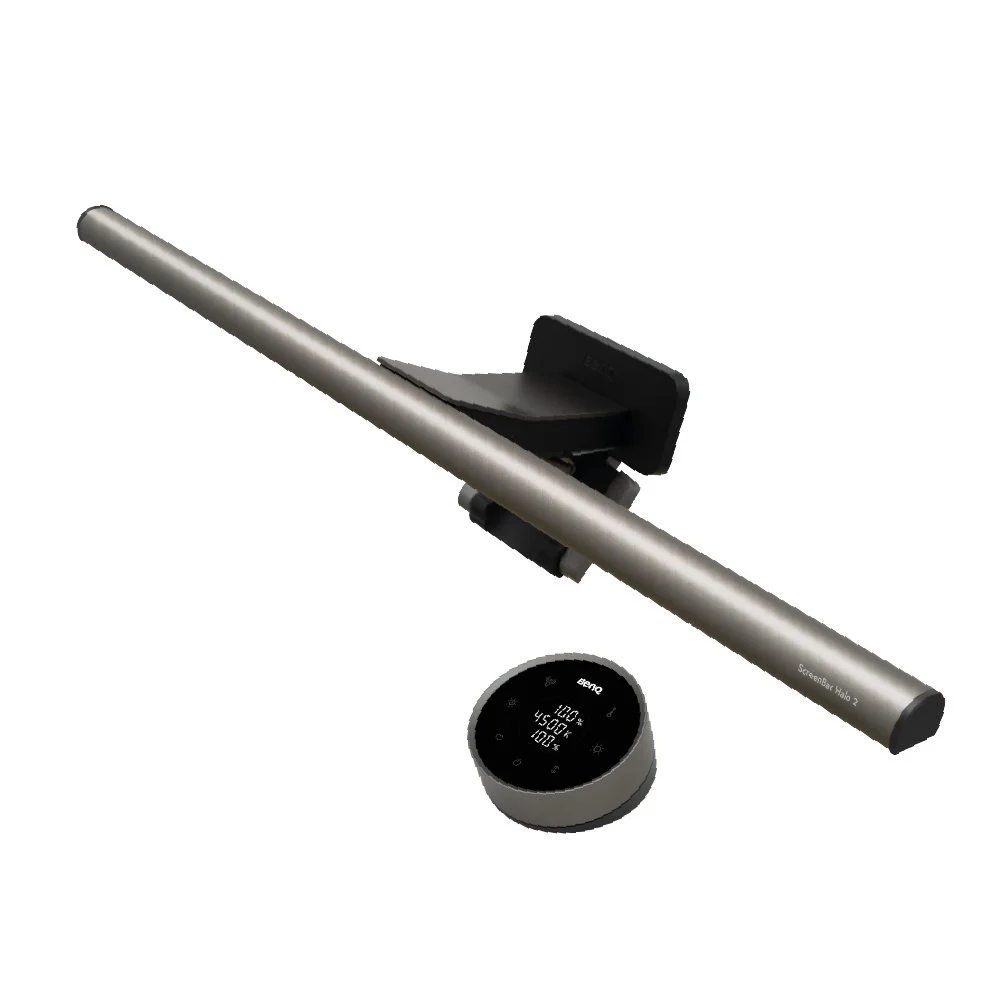
Review basis: This is a research-based editorial review of manufacturer documentation and published product specifications, not a hands-on test. Ratings reflect documented features and buying tradeoffs; performance claims are attributed to their sources.
The BenQ ScreenBar Halo 2 is a useful lighting option for a desk where a conventional lamp base would occupy valuable working space. Mounted above a compatible monitor, it directs light toward the desk and adds illumination behind the screen. Its strongest use case is a workstation that needs both task lighting and a less abrupt transition between a bright display and a dark surrounding wall.
The asymmetrical front-light design is intended to illuminate the work area while limiting direct light on the screen. That is a practical goal for reading notes, using a keyboard or handling small desk objects. The result still depends on the monitor position, lamp angle, screen finish and nearby reflective surfaces. Correct placement matters more than assuming the bar's shape automatically eliminates every reflection.
Two lighting roles in one installation
The rear light changes the brightness of the area behind the monitor. This can make the workspace feel more balanced, particularly in a dim room. It should be adjusted alongside the screen's own brightness rather than treated as a fixed decorative glow. A comfortable setup is one in which the desk, display and surrounding space are considered together.
A rechargeable wireless controller handles adjustments without requiring the user to reach over the monitor. That is convenient if the display is large or mounted on an arm. The controller still needs a sensible location and occasional charging. Wireless controls reduce one cable across the desk, but they do not eliminate the lamp's power requirement.
Brightness and color-temperature adjustment let the light suit different tasks and personal preferences. Reading printed material may call for a different setting from an evening video call. The useful feature is having controlled, repeatable options, not assuming one color temperature is universally best for productivity or health.
Fit is the first purchase check
Monitor-top lamps depend on the shape of the display housing. Confirm the clamp's supported thickness and curve range against the exact monitor, including any rear bulge or unusually thin panel. A compatible screen size alone is not enough. The webcam position also needs planning; BenQ provides an accessory arrangement, but the complete monitor, lamp and camera stack should remain stable and unobstructed.
The Halo 2 is a desk-lighting device rather than a replacement for all room illumination. A dark room may still benefit from other ambient light, and tasks away from the monitor may require a different lamp position. Buyers working primarily on a laptop that moves frequently may find a portable light simpler than a monitor-mounted system.
Our verdict favors the Halo 2 for a permanent workstation where desk space is scarce and adjustable front-and-back lighting would be used daily. It is a more specialized purchase than a basic lamp. Choose it after confirming physical compatibility and power arrangements, with the lighting benefits judged in the actual room rather than from product photography alone.
Sources and specifications
What works well
- Keeps a lamp base off the work surface
- Separate front and background illumination
- Wireless brightness and color control
What to consider
- Monitor shape must fit the clamp
- Requires suitable power and controller charging
- Does not replace every room-lighting need
At a glance
- Lighting
- Asymmetric front light and rear backlight
- Control
- Rechargeable wireless controller
- Mount
- Monitor-top clamp with compatibility limits