Home & Garden / Review
Spear & Jackson 8290RS Razorsharp Ratchet Anvil Lopper Review: Stepwise cutting for hard woody branches
8290RS combines telescopic reach with ratchet action, favoring deliberate heavy cuts over quick repetitive trimming.
Review basis: This is a research-based editorial review of manufacturer documentation and published product specifications, not a hands-on test. Ratings reflect documented features and buying tradeoffs; performance claims are attributed to their sources.
A lopper for a particular kind of cut
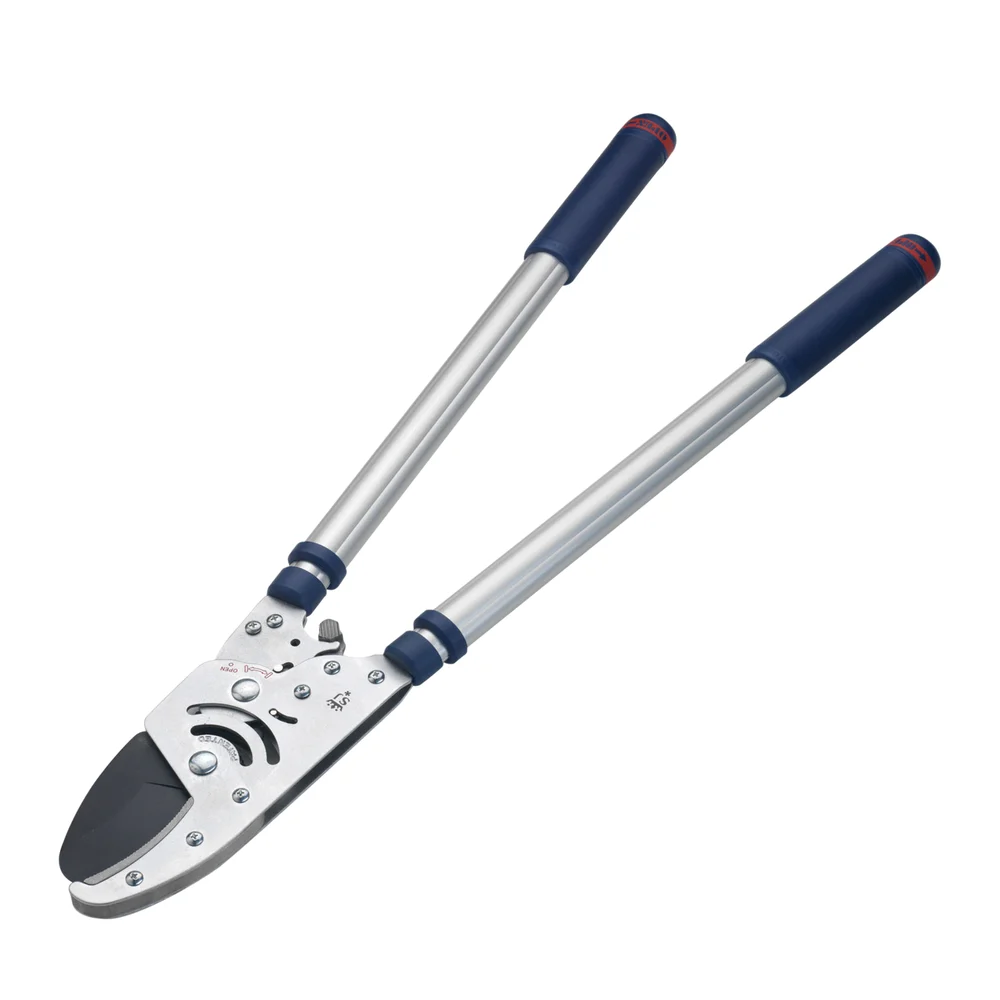
The Spear & Jackson 8290RS is an anvil lopper aimed at dead or hard woody branches. Its cutting blade closes onto an anvil rather than passing another blade in a bypass arrangement. That distinction should guide the purchase: this is a tool for a particular workload, not a universal replacement for every pruning shear. Gardeners who mostly shape soft live growth may prefer a bypass design. Those regularly removing harder material can find the anvil and ratchet combination more relevant than simply buying a longer version of a familiar hand pruner.
Ratchet action trades speed for stages
The ratchet mechanism completes a thicker cut through a sequence of shorter handle movements. This can make the task more manageable than demanding one continuous full-force squeeze, but it also means each cut takes several actions. That tradeoff is useful for occasional substantial branches and less attractive for rapid repetitive trimming of fine growth. The user still needs a stable working position and enough space to move both handles. A ratchet does not turn an awkwardly positioned branch into a convenient cut merely because the mechanism can multiply the applied effort.
Reach is adjustable
The manufacturer specifies telescopic handles extending from 710mm to 1,030mm. That range allows the tool to reach farther or provide a different leverage position, but extended handles also change balance and increase the space needed to open them. Use the shortest practical setting for the task rather than extending them automatically. Twist-and-lock adjustments should be secured before cutting. The extra reach is helpful for branches that are otherwise just outside comfortable access, but it should not encourage overreaching or working from an unstable position.
Blade and capacity considerations
Spear & Jackson lists an SK5 carbon-steel upper blade with a PTFE coating and a maximum cutting capacity of 50mm for this model. The coating and material are useful specifications, yet the branch's condition and the user's control still determine how demanding a cut becomes. Near-capacity work may be more appropriate for a pruning saw, particularly when handle clearance is poor. Clean residue from the cutting surfaces, inspect the mechanism and follow the maintenance guidance. A large advertised diameter is an upper application reference, not a target to force on every pruning session.
Verdict
Choose 8290RS when you need deliberate cutting of hard or dead woody branches and will use both the ratchet stages and adjustable reach. It is less suitable for fine live-growth shaping or cramped spaces where long handles cannot open freely. Compare a bypass lopper for different plant-care tasks and a saw for branches that are awkward or overly demanding. The product's value is a specific mechanical advantage applied to the right material. Check the exact 8290RS designation because similarly named Razorsharp models use different cutting actions and should not be treated as interchangeable.
Sources
What works well
- Ratchet action divides heavier cuts into stages
- 710–1,030mm telescopic handles
- SK5 blade with PTFE coating
What to consider
- Slower than a single action for small repetitive cuts
- Long handles need clearance
- Anvil action targets different work from bypass pruning
At a glance
- Model
- 8290RS / SJ-8290RS
- Action
- Ratchet anvil
- Handle length
- 710–1,030mm
- Maximum cutting capacity
- 50mm
- Blade
- SK5 carbon steel with PTFE coating