Photography & Camera Gear / Review
Sigma 18–50mm F2.8 DC DN Contemporary Sony E Review: A Compact Standard Zoom for APS-C Travel Kits
The Sigma 18–50mm F2.8 DC DN Contemporary is a strong candidate for a Sony APS-C owner who wants one small zoom for everyday photographs and travel. It combines a useful wide-to-short-telephoto range with a constant…
Review basis: This is a research-based editorial review of manufacturer documentation and published product specifications, not a hands-on test. Ratings reflect documented features and buying tradeoffs; performance claims are attributed to their sources.
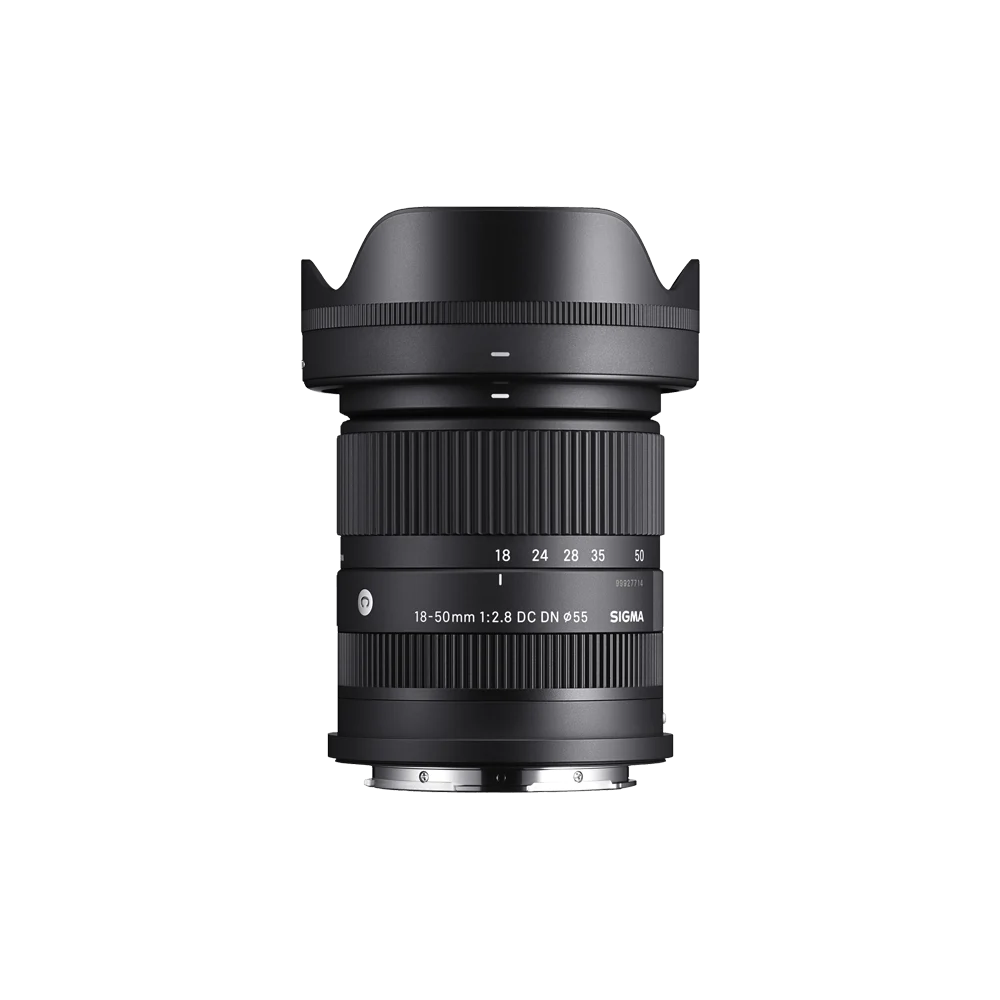
The Sigma 18–50mm F2.8 DC DN Contemporary is a strong candidate for a Sony APS-C owner who wants one small zoom for everyday photographs and travel. It combines a useful wide-to-short-telephoto range with a constant f/2.8 aperture while keeping the lens relatively light. The important qualification is in the DC designation: this is an APS-C lens, not a compact full-frame standard zoom.
A useful range without a large barrel
On a Sony APS-C camera, the 18–50mm range covers approximately the angle of view associated with 27–75mm on full frame. That spans environmental scenes, people and details without requiring frequent lens changes. It is not an ultra-wide zoom or a long telephoto, so a buyer should still consider which subjects routinely fall outside that range.
Sigma specifies a 290-gram weight for the Sony E version. That is a meaningful part of its appeal on a small camera. A standard zoom tends to spend more time attached than a specialty lens; keeping that everyday combination manageable can matter more than saving weight on an accessory used occasionally.
The constant f/2.8 maximum aperture avoids a changing maximum opening as you zoom. This simplifies exposure planning and gives more control over depth of field than many slower compact zooms. It does not guarantee an identical appearance across the range. Focal length, subject distance and background distance still influence how a scene is rendered.
Understand the format and stabilization choices
The lens is designed for APS-C coverage. It can physically belong to the same E-mount ecosystem as a full-frame Sony body, but that does not turn it into a full-frame lens. Check the camera's crop behavior and resulting image dimensions if you intend to use it on a larger-sensor body. Buy the exact mount version as well; the product name is shared across several camera systems.
There is no optical stabilizer in this lens. On a body with in-body stabilization, that feature may help with camera movement. On a body without it, shutter speed, technique and support become more consequential. Either way, stabilization cannot freeze a moving person. This distinction is especially relevant when comparing a slower stabilized kit zoom with a brighter unstabilized replacement.
Close-focusing capability adds useful detail photography to the lens's role. At very short distances, be mindful of working space and the light blocked by the camera. A close minimum-focus specification does not mean every small subject will be easy to illuminate or frame.
Buying verdict
Choose the 18–50mm F2.8 for a compact Sony APS-C kit when a practical everyday range and constant aperture matter more than maximum reach. It is a focused alternative to carrying several primes. Keep a longer lens for genuinely distant subjects, and choose a full-frame design if full-sensor coverage is the requirement. Within its intended format, the combination is unusually coherent.
Sources and specifications
What works well
- Constant f/2.8 in a compact zoom
- Practical everyday APS-C focal range
- Close-focusing capability
What to consider
- Designed for APS-C rather than full-frame coverage
- No optical stabilization; body capability matters
At a glance
- Version
- Sony E-mount APS-C
- Zoom range
- 18–50mm
- Maximum aperture
- Constant f/2.8
- Weight
- 290g