Photography & Camera Gear / Review
OM SYSTEM OM-3 Review: A Travel Camera Whose Creative Controls Matter More Than Retro Styling
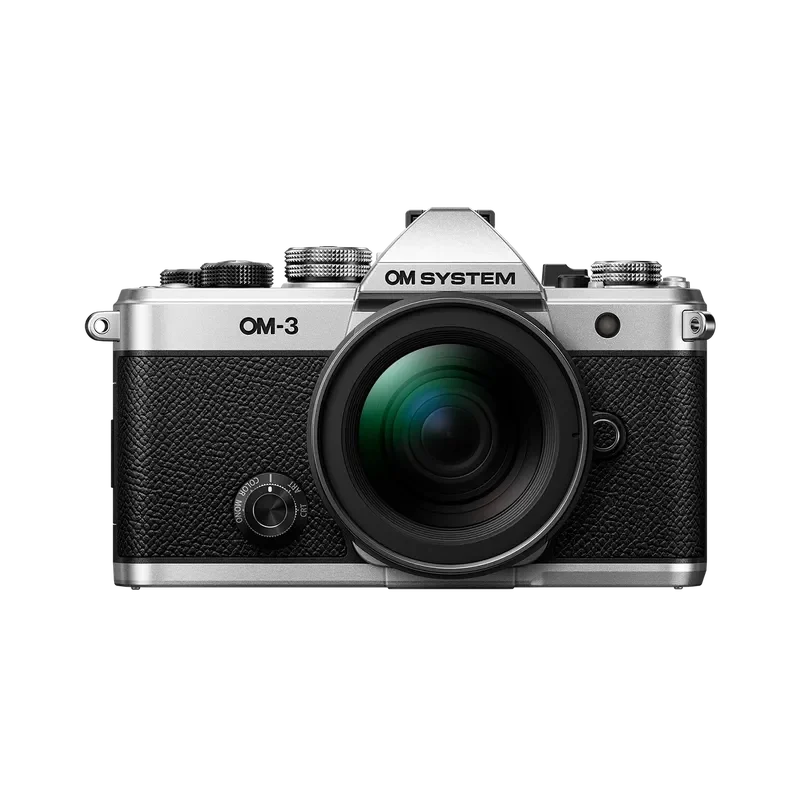
The OM SYSTEM OM-3 makes sense for a photographer who wants to carry a capable system regularly and enjoys choosing an image treatment while shooting. Its retro appearance is easy to notice, but the more…
Review basis: This is a research-based editorial review of manufacturer documentation and published product specifications, not a hands-on test. Ratings reflect documented features and buying tradeoffs; performance claims are attributed to their sources.
The OM SYSTEM OM-3 makes sense for a photographer who wants to carry a capable system regularly and enjoys choosing an image treatment while shooting. Its retro appearance is easy to notice, but the more useful questions concern lens size, the creative dial and the kind of photographs that will be made. Styling alone is a weak reason to change an established system.
A compact system, rather than just a compact body
The OM-3 uses a 20.4-megapixel stacked sensor and the Micro Four Thirds mount. A broad range of lenses makes it possible to assemble a kit around travel, close-up work or longer-distance subjects. Compare actual lens dimensions and weight when choosing the kit. Sensor format provides an opportunity for compact equipment; it does not guarantee that every lens combination will be small.
The resolution is sufficient for many everyday prints and publication uses, but frequent heavy cropping changes the calculation. A photographer who repeatedly extracts a small distant subject from the frame should consider the final pixel dimensions, not simply the camera's maximum file size. Getting the appropriate lens into the bag remains important.
OM SYSTEM lists a weight of 496 grams including battery and memory card. Add the intended lens, strap and spare power before comparing it with a different system. For a long walking day, the equipment that remains comfortable and accessible is often more useful than a theoretically superior kit left behind.
Controls and weather resistance
The front creative dial gives image treatment a prominent place in the shooting process. That can suit photographers who like to decide between color and monochrome interpretations in the field. It is also a reason to handle the camera before buying: a physical control is valuable when its location and behavior fit the way you work.
Weather resistance is another practical strength, with an important condition. OM SYSTEM specifies IP53 performance in compatible combinations; protection depends on the attached lens. Check the exact pairing and the manufacturer's operating guidance. A resistant body does not turn an unprotected lens, an open connector or an exposed bag into a sealed system.
Computational features and high-speed capture expand the range of possible techniques, but each has conditions. Read the requirements for the particular mode rather than assuming every headline feature operates identically with every lens and subject. For moving scenes, concentrate on the mode's actual focus and exposure behavior instead of a maximum frame-rate number.
Buying verdict
The OM-3 is a strong candidate for travel and everyday creative photography when its controls, lens ecosystem and weather-resistant design align with the buyer's priorities. It is less compelling for someone whose main requirement is maximum cropping latitude or who prefers a different grip and control arrangement. Choose the complete system you will carry, and treat the creative dial as a working tool rather than a decorative feature.
Sources and specifications
What works well
- Compact Micro Four Thirds system potential
- Physical creative controls
- Conditional IP53 weather resistance
What to consider
- 20.4MP leaves less cropping latitude than higher-resolution bodies
- Weather protection depends on the attached lens
At a glance
- Sensor
- 20.4MP stacked BSI Live MOS
- Mount
- Micro Four Thirds
- Weight
- 496g including battery and card
- Weather rating
- IP53 with compatible lens conditions