Baby & Kids / Review
Ergobaby Omni Breeze Review: A versatile carrier with a fitting learning curve
Four carrying positions and extensive mesh make this a flexible structured carrier, provided its adjustments work for both wearers.
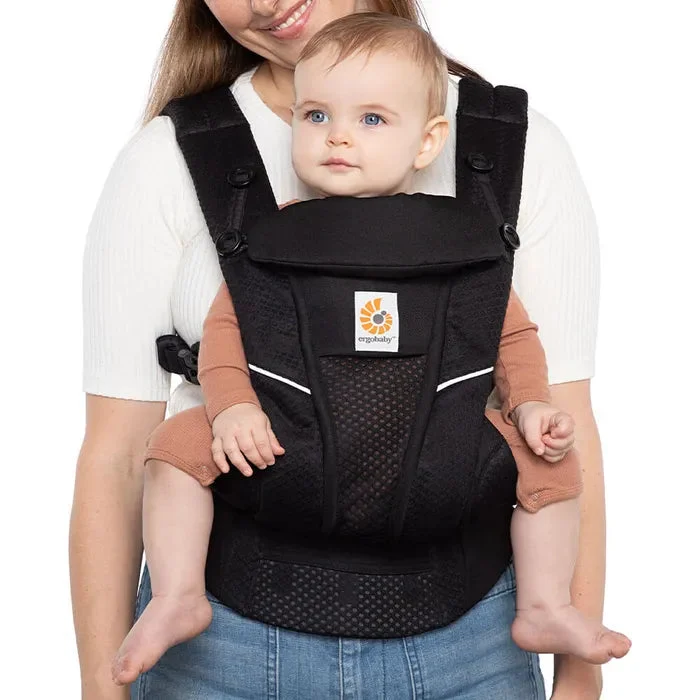
Review basis: This is a research-based editorial review of manufacturer documentation and published product specifications, not a hands-on test. Ratings reflect documented features and buying tradeoffs; performance claims are attributed to their sources.
The right buyer
The Omni Breeze is best approached as a long-use structured carrier rather than the smallest possible newborn carrier. Its case rests on four carrying positions, an adjustable seat and mesh across much of the body. Families who expect to carry regularly, switch between adults or progress to hip and back carrying have more reason to choose it than someone seeking an occasional short cuddle at home. More adjustment creates more possibilities, but also means more straps and settings to learn before the carrier becomes part of an easy routine.
Fit matters more than the headline range
Ergobaby specifies a minimum of 7 pounds and 20 inches, with an overall maximum of 45 pounds. These are boundaries, not permission to use every carrying position at every stage. Outward facing requires adequate head and neck control and the specified fit; hip and back carrying require the child to sit independently. The inward-facing configuration is the starting point for smaller babies. Take time to understand the seat-width adjustment and panel position. A carrier with a broad range is useful only when the individual child fits the selected setup.
What the mesh design contributes
SoftFlex mesh, vented sections in the waistbelt and lumbar support give the Breeze a clear warm-weather emphasis. The sensible benefit is less solid fabric surrounding the wearer and child, not a promise that either will stay cool in every condition. Padded shoulder straps can be crossed, offering another way to distribute the carrier on different bodies. That flexibility is attractive for shared use, although changing between wearers can require readjustment. Trying the carrier with the intended adults is more informative than choosing solely from a fabric description.
Daily handling and alternatives
A structured waistband and buckled straps trade the softness and minimal bulk of a wrap for repeatable fastening points. That can suit a parent who dislikes tying fabric, while someone prioritizing a compact bag may prefer a smaller carrier. The Omni Breeze’s extra modes are worth considering honestly: if you will only carry inward facing, you may be paying for versatility you never use. Its instruction videos and mode-specific guidance are useful ownership resources, especially before changing positions. Practicing adjustments without rushing is part of the purchase, not an optional finishing touch.
Verdict
Choose the Omni Breeze when broad adjustability and several carrying positions fit a realistic plan for frequent babywearing. Its mesh-focused construction is a sensible feature for warm environments, and the combination of padded straps and lumbar support gives wearers options for fitting. It is a less obvious choice if minimal bulk, a very simple newborn-only setup or rapid transfers between differently sized adults is the overriding priority. The strongest reason to buy is a good fit on your own body; the longest weight range on a comparison chart cannot substitute for that.
Sources
What works well
- Four carrying positions
- Adjustable seat and crossable padded straps
- Mesh body and vented waist support
What to consider
- More settings to learn than a simple carrier
- Mode-specific developmental requirements
- Structured design is bulkier than a minimal wrap
At a glance
- Overall range
- 7–45 lb; minimum height 20 in
- Positions
- Inward, outward, hip, back
- Fabric design
- SoftFlex mesh
- Straps
- Padded; crossable