Outdoor Living & Camping / Review
Black Diamond Spot 400 review: flexible power is the headline feature
A dual-fuel headlamp that suits buyers who want a choice between spare cells and a rechargeable pack.
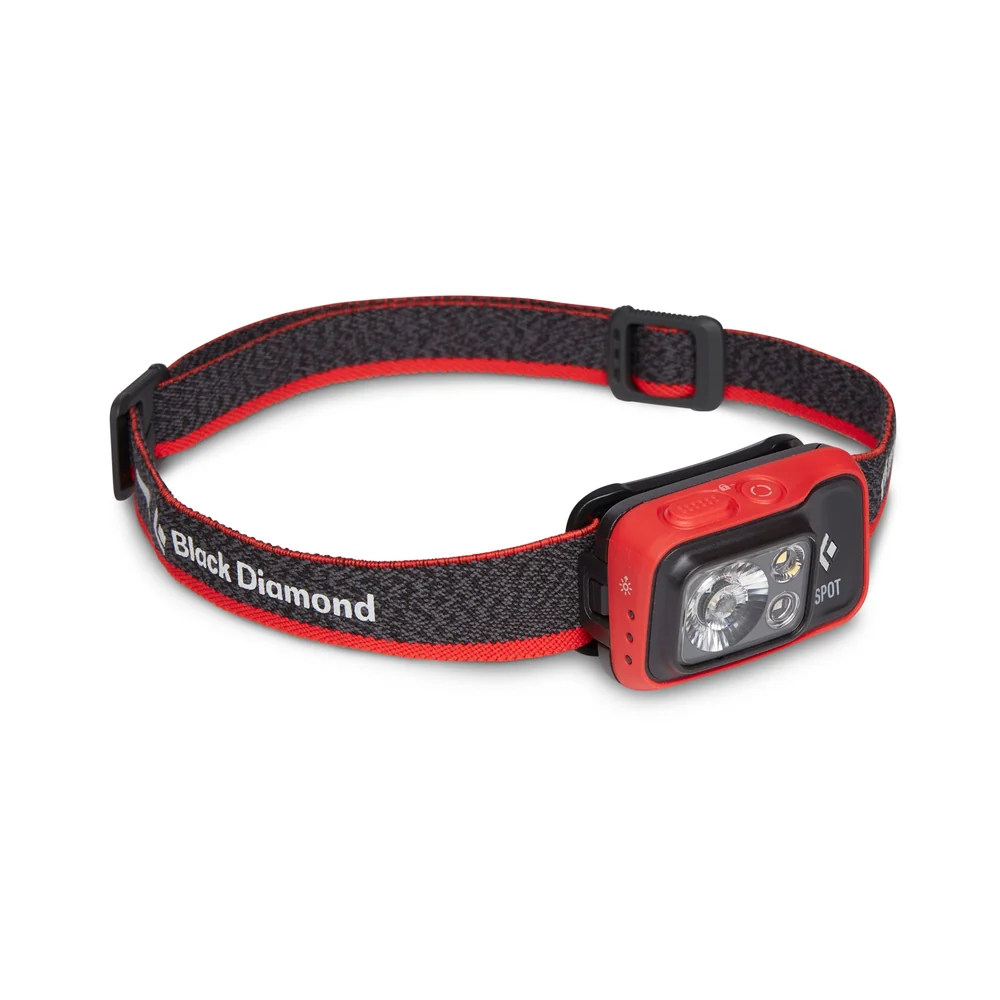
The Black Diamond Spot 400 is most appealing for its power flexibility. A camper can use ordinary AAA cells or the compatible rechargeable pack, depending on the trip and charging routine. That is a more useful starting point than comparing headlamps solely by their maximum lumen figure.
What the specification says
Black Diamond lists a maximum output of 400 lumens, compatibility with three AAA batteries or its separately sold BD 1500 pack, a red-light mode and a digital lockout. The official runtime table separates brightness levels and battery types. Those distinctions matter: the longest listed runtime does not occur at maximum output.
The light is specified as IPX8, with a qualification that water may enter the battery compartment after submersion and the unit should be dried afterward. A waterproof label therefore does not remove the need to follow the care instructions. Read the exact conditions rather than treating the rating as unlimited protection against every wet situation.
Choose the power routine
For frequent short outings with reliable charging, a rechargeable pack may be convenient. For a trip where replacement cells are part of the plan, the AAA option may be useful. Compare the complete cost of the lamp and the power arrangement you will actually use. Buying the rechargeable pack later can change the apparent value of a low initial price.
Learn the controls before using the light in the dark. Mode changes, lockout and brightness adjustment are more helpful when they are familiar. Pack the lamp so it is easy to reach, and think about a backup appropriate to the outing rather than assuming one charged device resolves every contingency.
Verdict
The Spot 400 is a coherent option for buyers who value a choice of power sources and several light modes. Its best feature is flexibility, while the tradeoff is managing a control set and power choice. Compare useful runtime at the needed brightness, and treat water resistance as a specification with care requirements.
Editorial rating: 4.2 / 5
Editorial assessment of the documented feature set, design tradeoffs, versatility and ownership requirements for the intended buyer. Features and design each contribute 30%; versatility and ownership each contribute 20%.
- Features: 4.3 / 5 (30%) — Brightness settings, red light and lockout provide a meaningful outdoor control set, with the runtime table separating the conditions needed for a fair comparison.
- Design: 4.1 / 5 (30%) — The headlamp format keeps light directed with the user’s view, but the control sequence needs practice and water-resistance care conditions must be understood.
- Versatility: 4.4 / 5 (20%) — The option of AAA cells or the compatible rechargeable pack is a strong flexibility benefit for different charging and spare-power plans across outings.
- Ownership: 4.0 / 5 (20%) — Included AAA operation gets the basic setup started, while buyers wanting rechargeable use must add the optional pack and plan appropriate care after wet conditions.
Sources
What works well
- AAA or optional BD 1500 power
- Red-light and lockout functions
- Brightness modes support different tasks
What to consider
- Rechargeable pack is separate
- Water-resistance care instructions still apply
At a glance
- Maximum output
- 400 lumens
- Power
- 3 AAA or optional BD 1500
- Ingress rating
- IPX8 with manufacturer conditions
- Modes
- Distance, proximity, red, dimming, strobe