Baby & Kids / Review
Stokke Tripp Trapp Review: A Chair System With a Long-Term Plan
Adjustable seating is compelling when the chair will remain at the family table through several stages.
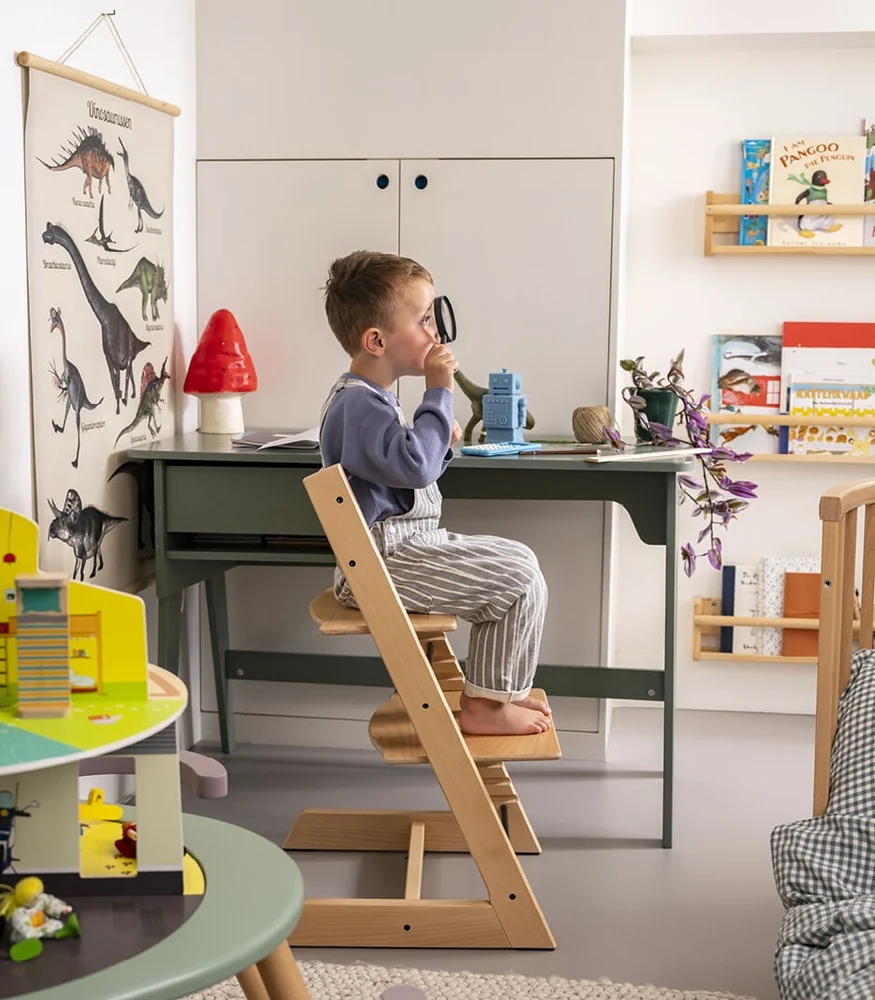
The design argument
The Tripp Trapp approaches feeding furniture as a chair that changes with the household. Its adjustable seat and footplate make the long-term idea clear: the furniture can be reconfigured instead of being discarded at the end of one short stage. That approach is most appealing when the chair will have a permanent place at a dining table. It is less compelling if frequent folding and storage are the main requirements.
Buy the right configuration
The chair, infant accessories and tray options form a system. A product photograph can show more than the box you are ordering contains, so compare the exact bundle and age-appropriate components. Stokke’s newborn configuration and its seated-child setup serve different stages. Follow the instructions for the particular components and market version, including restraint and stability requirements.
Adjustment requires attention
Height and depth adjustment provide flexibility, but they also mean someone must set the chair up appropriately and revisit the settings as the child grows. Follow the manual’s assembly and fastening sequence. A chair should not be judged only by whether its finish matches the dining room; access for cleaning, surrounding space and correct positioning matter every day.
The secondhand question
A durable-looking chair can be attractive used, but age and accessory compatibility need to be verified. Obtain the model information, check recalls and make sure the required parts are present. Do not assume a current accessory fits every older version. The apparent saving disappears quickly if the chair needs incompatible or unavailable components.
Verdict
The Tripp Trapp is a considered choice for families who value adjustable furniture and intend to keep it in use beyond infancy. The main tradeoffs are system complexity and the total cost of the required configuration. A simpler chair may be a better fit for occasional visits or tight storage. The strongest buying case is a long-term place at the table, supported by correct setup and a realistic accessory budget.
Details that affect the purchase
Stokke’s current chair support page identifies a further fit detail: the design is intended for tables approximately 72 to 76 centimeters high, not taller counter-height surfaces. Measure the actual dining table before building a long-term plan around the chair. The same support guidance identifies indoor use, so a patio feeding setup should not be assumed to be an equivalent application.
Editorial score rationale
The Tripp Trapp earns strong marks for adjustable, long-term furniture design. The ownership score reflects the effort and cost of choosing and maintaining the correct configuration.
Sources
What works well
- Adjustable seat and footplate
- Can be reconfigured as needs change
- Furniture-like design suits permanent dining placement
What to consider
- Required accessories depend on child stage
- Adjustment and compatibility need attention
At a glance
- Seat
- Height and depth adjustable
- Footplate
- Height and depth adjustable
- Configuration
- Stage-specific accessories required
- Intended table height
- 72–76 cm, per Stokke
- Location
- Indoor use