Photography & Camera Gear / Review
Sony a6700 Review: A Compact Hybrid System With Serious Mode Choices
The Sony a6700 is a convincing starting point for someone who wants a compact camera system that can handle photographs and carefully planned video. Its strongest argument is the combination of APS-C lenses, in-body stabilization…
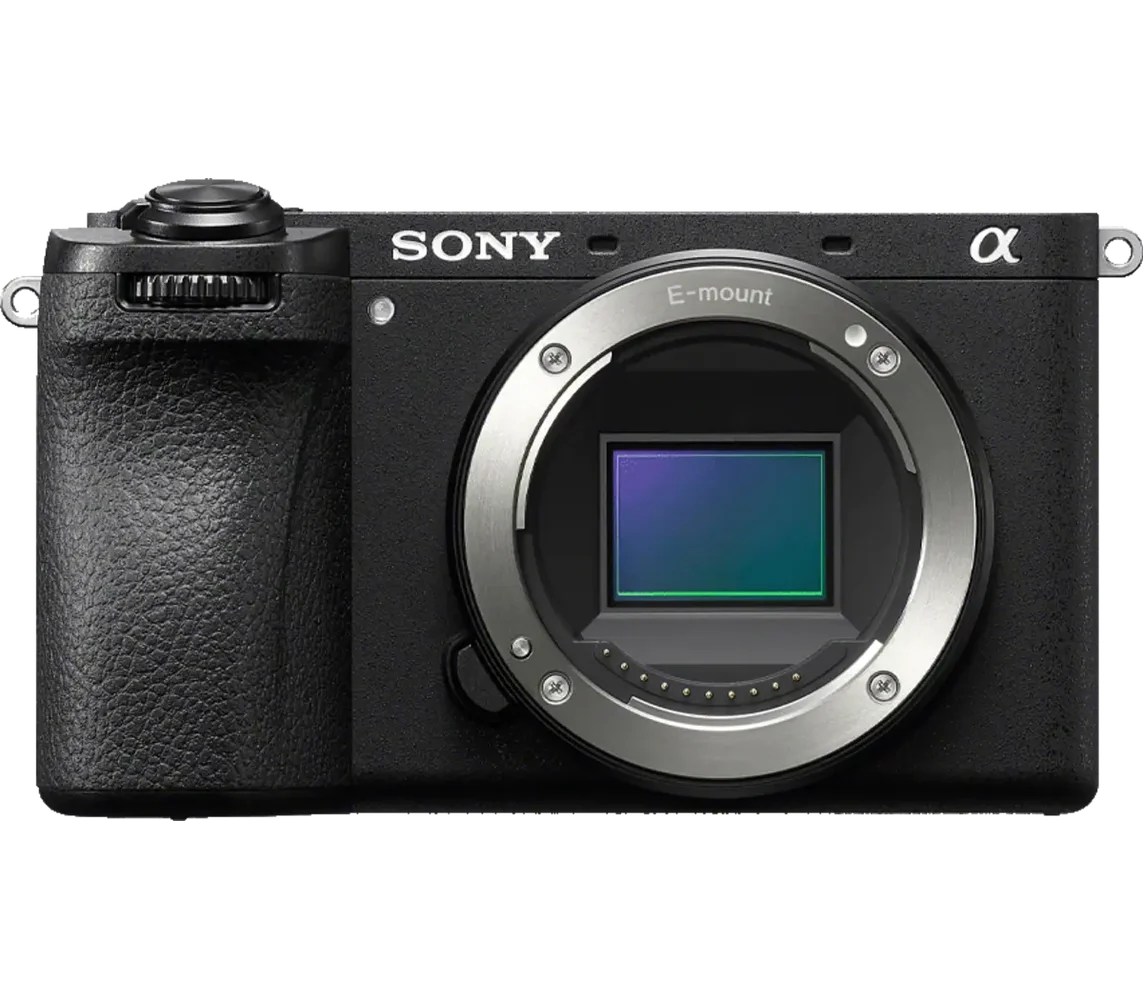
Review basis: This is a research-based editorial review of manufacturer documentation and published product specifications, not a hands-on test. Ratings reflect documented features and buying tradeoffs; performance claims are attributed to their sources.
The Sony a6700 is a convincing starting point for someone who wants a compact camera system that can handle photographs and carefully planned video. Its strongest argument is the combination of APS-C lenses, in-body stabilization and extensive recording options. The right buyer values that flexibility enough to learn the differences between modes, rather than simply selecting the largest number in the menu.
Build the kit around the sensor format
Sony specifies a 26-megapixel APS-C sensor, BIONZ XR processing and dedicated subject-recognition processing. The APS-C format can support a smaller lens kit, particularly with lenses designed specifically for that sensor size. A large full-frame zoom still remains large when attached to a compact body, so assess the equipment as a complete package.
The E-mount ecosystem offers room to choose between a small prime, a general-purpose zoom and more specialized lenses. For travel, a lens that stays on the camera may be more valuable than a collection that repeatedly gets left in the hotel. For portraits, aperture and working distance deserve attention alongside focal length. The body does not decide those creative tradeoffs on its own.
Subject recognition can simplify focusing on supported subjects, but it is still worth learning how to select or override the intended target. A camera cannot know which person matters in every group. Practice changing the focus area and reviewing results before relying on automation during a fast-moving occasion.
Video flexibility has a cost
The a6700 offers oversampled 4K at up to 60p and a cropped 4K/120p mode. The latter can be useful for slow motion, but it changes framing substantially. Plan the lens for that mode and the available working distance. A mode that is excellent for a distant detail may be impractical for a cramped room.
More demanding recording settings also affect card requirements, storage, editing performance and power planning. Choose a format that matches the delivery rather than assuming every project needs the most data-heavy option. A short social video and a heavily graded production can sensibly use different settings on the same camera. Check Sony's recording and temperature guidance for continuous sessions.
Five-axis in-body stabilization adds flexibility with compatible lenses, including non-stabilized primes. Its role is to reduce camera movement; moving subjects still need an appropriate exposure. For walking footage, evaluate the complete rig and framing instead of expecting one stabilization setting to solve every kind of motion.
Buying verdict
Choose the a6700 when you want a compact E-mount system with meaningful room to develop both stills and video skills. Its capabilities reward deliberate setup and lens selection. Buyers who mainly want simple family photographs may not use its advanced recording options, while dedicated video users should compare their audio, cooling and monitoring needs. The a6700 is most persuasive as a flexible hybrid, not as a substitute for every specialized camera.
Sources and specifications
What works well
- Broad E-mount lens ecosystem
- Dedicated subject-recognition processing
- 4K options and in-body stabilization
What to consider
- 4K/120p has an additional crop
- High-quality video settings demand suitable media and editing hardware
At a glance
- Sensor
- 26.0MP APS-C Exmor R
- Mount
- Sony E
- Video
- 4K/60p oversampled; 4K/120p cropped
- Stabilization
- Five-axis in-body