Music & Instruments / Review
Shure MV7+ Review: A voice microphone with two distinct connection paths
Shure's MV7+ is most persuasive for a podcaster, streamer or musician who wants a convenient USB microphone now and an analog XLR connection available for a later setup. It combines a dynamic cardioid capsule with…
Review basis: This is a research-based editorial review of manufacturer documentation and published product specifications, not a hands-on test. Ratings reflect documented features and buying tradeoffs; performance claims are attributed to their sources.
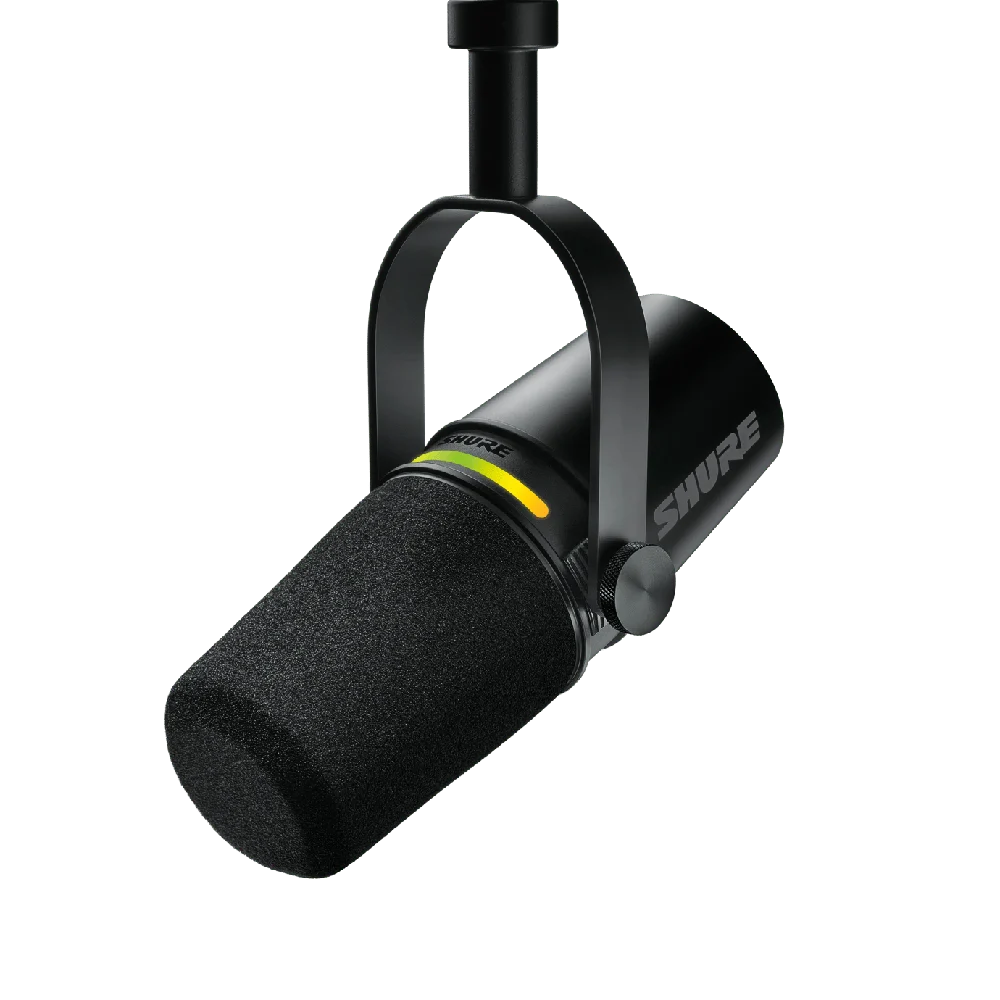
Shure's MV7+ is most persuasive for a podcaster, streamer or musician who wants a convenient USB microphone now and an analog XLR connection available for a later setup. It combines a dynamic cardioid capsule with digital processing and direct headphone monitoring. The important point is that its two output paths do different jobs, rather than behaving as interchangeable sockets for the same processed signal.
USB-C connects to a compatible computer or mobile device and provides access to the microphone's digital features. Shure's software offers Auto Level, a real-time Denoiser, Digital Popper Stopper, tone controls and other processing. The passive XLR output feeds a mixer or interface, and Shure explicitly states that software settings do not affect that analog audio.
Useful processing, sensible placement
Auto Level can reduce the effort of maintaining a consistent voice level, particularly for solo production. Noise reduction and plosive processing can also help manage common distractions. They do not eliminate the need for a quiet location or appropriate microphone technique. A fan beside the microphone, an echoing room or inconsistent speaking distance still shapes what enters the recording.
The cardioid pattern favors sound from the intended direction, making the microphone a natural choice for one close voice. It is less appropriate when the purpose is capturing several people spread around a table with equal prominence. Moving the microphone farther away to cover a group also changes the balance between voices and room sound. A different microphone arrangement may solve that problem more directly.
The headphone output provides immediate monitoring without relying solely on the delayed signal returning through recording software. Hearing the microphone while adjusting position helps identify plosives, clothing noise or an unsuitable room before an extended take. The LED touch panel adds an accessible mute control and configurable visual feedback, though its brightness and visibility should be considered in a filmed setup.
Plan the physical installation
The microphone needs a suitable stand or boom arm and enough clearance to place it near the speaker without obstructing the screen. Its yoke makes angle adjustment possible, but a weak desk mount can make the entire setup awkward. Assess the arm's capacity, desk attachment and cable route as part of the purchase rather than treating them as cosmetic extras.
Buyers moving to XLR should budget for an interface with appropriate gain and monitoring. The microphone's built-in digital convenience does not transfer automatically through an analog cable. Conversely, someone who expects to use USB permanently may reasonably value its direct connection and processing without purchasing a separate interface at all.
The MV7+ earns a strong verdict for focused voice production and flexible system planning. Its USB features reduce setup complexity while XLR keeps another workflow available. The best buyer understands that flexibility and will use careful placement, rather than expecting processing to rescue every recording environment.
Sources and specifications
What works well
- USB and XLR suit different stages of a setup
- Direct headphone monitoring
- Digital processing supports spoken-word production
What to consider
- XLR output does not receive software processing
- Needs an appropriate stand or arm
- Close placement still matters
At a glance
- Type
- Dynamic cardioid microphone
- Outputs
- USB-C and passive XLR
- Monitoring
- 3.5mm headphone output
- DSP
- Auto Level, Denoiser, Popper Stopper and more over digital path