Photography & Camera Gear / Review
Panasonic LUMIX S9 Review: Full-Frame Capture for a Screen-Based Creative Workflow
The Panasonic LUMIX S9 is a deliberately specialized full-frame camera. It suits someone comfortable composing on a rear screen who wants a portable route from capture to a finished visual style. It is a less…
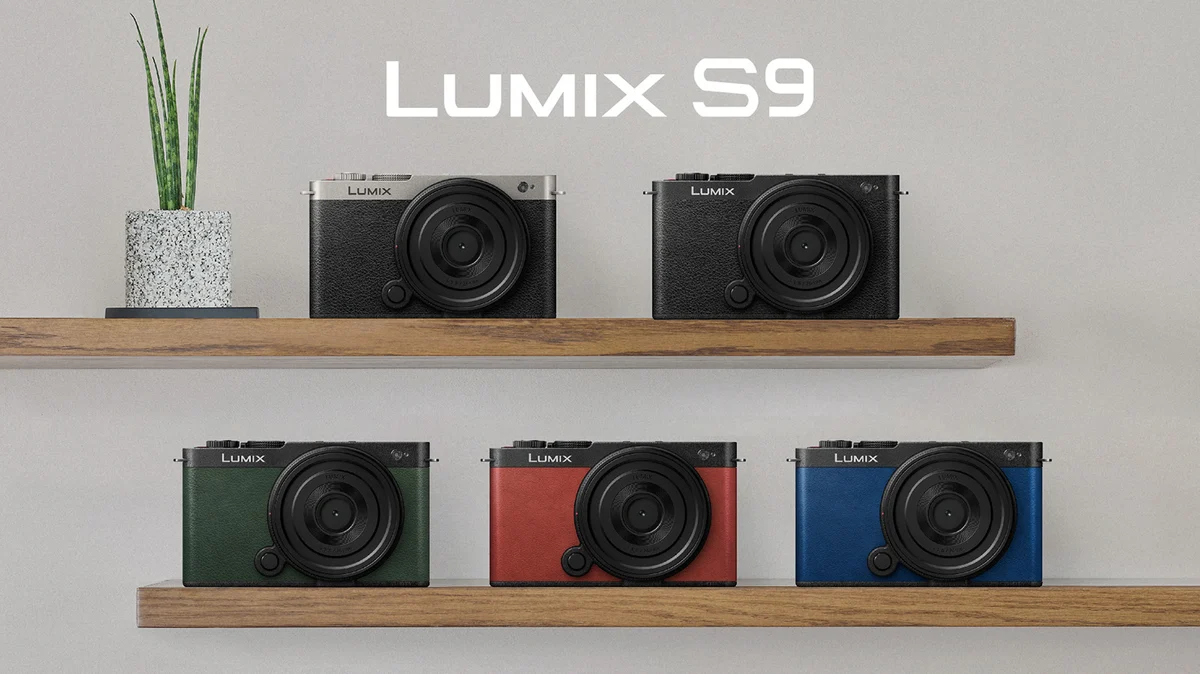
Review basis: This is a research-based editorial review of manufacturer documentation and published product specifications, not a hands-on test. Ratings reflect documented features and buying tradeoffs; performance claims are attributed to their sources.
The Panasonic LUMIX S9 is a deliberately specialized full-frame camera. It suits someone comfortable composing on a rear screen who wants a portable route from capture to a finished visual style. It is a less natural choice for a photographer who considers an eye-level viewfinder central to the experience. That distinction matters more than the appeal of a small, colorful body.
Start with how you compose
The S9 combines a 24.2-megapixel full-frame sensor with the L-Mount system. A compact lens can make an appealing everyday combination, while a large zoom can change the balance dramatically. Judge the body with the lens you plan to use. The size of the sensor does not tell you how the complete camera will feel when carried one-handed or packed into a small bag.
There is no built-in viewfinder. Screen-based composition may feel familiar to a phone photographer and useful for low or unusual angles, but it deserves a real-world handling check in bright conditions. Someone who instinctively brings a camera to the eye should not assume that habit will disappear after purchase. A different body may be a better fit even if it occupies more space.
The electronic-shutter-only design is equally consequential. Fast movement and certain artificial lighting can reveal limitations that are not apparent in a static daytime scene. This is a reason to match the camera to the intended subjects and lighting, not to assume that every electronic-shutter exposure will be problematic. Test representative conditions before depending on it for an important occasion.
A camera for choosing the look
Panasonic's Real Time LUT approach puts a finished color treatment closer to the moment of capture. That can be useful when speed and consistency matter more than building every look from scratch afterward. Keep the intended output in mind: a dramatic treatment suitable for a personal travel sequence may be less appropriate for color-sensitive product photographs.
A consistent workflow should include a way to preserve editing flexibility when needed. Decide which files to retain, how they will be transferred and how the chosen software handles them. A compact camera does not automatically create a simple archive. Video in particular can turn an apparently small project into a substantial storage task.
Recording features and limits can change with firmware. Check the installed version and Panasonic's current guidance for the exact recording mode, power arrangement and session length. A short creative clip and a long continuous interview place different demands on the same body.
Buying verdict
Choose the S9 for a compact, screen-oriented full-frame workflow in which color treatment and sharing are active priorities. Do not buy it solely to obtain a large sensor in the smallest possible package. Its missing viewfinder and shutter design are fundamental characteristics. For a buyer comfortable with those choices, it offers a distinctive creative tool; for an eye-level or demanding action workflow, a more conventional body is easier to recommend.
Sources and specifications
What works well
- Full-frame sensor in a compact body
- L-Mount lens choices
- Real Time LUT workflow
What to consider
- No electronic viewfinder
- Electronic-shutter-only design needs attention around motion and artificial light
At a glance
- Sensor
- 24.2MP full-frame
- Mount
- L-Mount
- Viewfinder
- None
- Shutter
- Electronic