Smart Home & Security / Review
Eve Motion Matter Review: Motion-triggered lighting with useful brightness context
Eve Motion pairs motion and light sensing for compatible Matter-over-Thread homes.
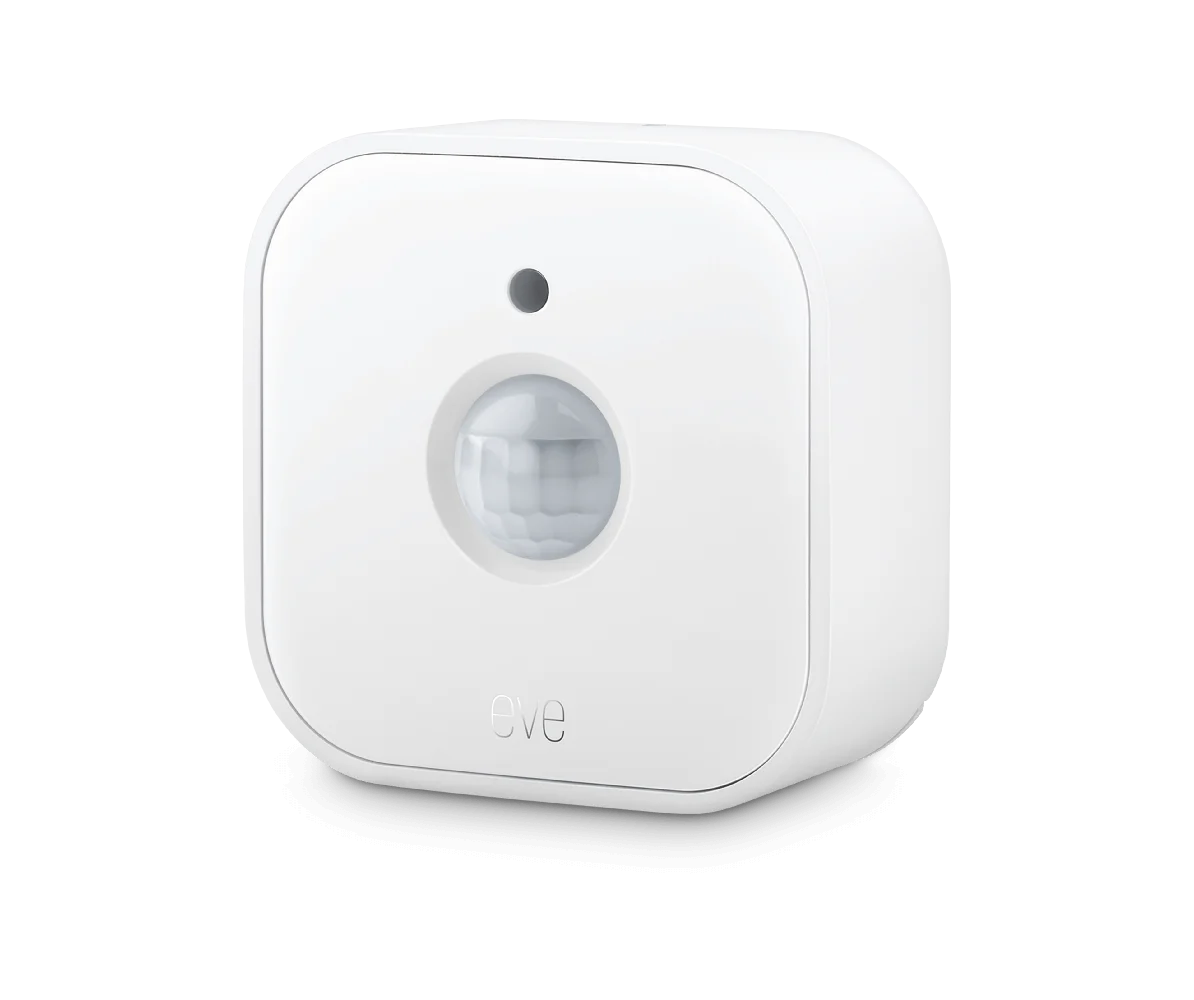
Review basis: This is a research-based editorial review of manufacturer documentation and published product specifications, not a hands-on test. Ratings reflect documented features and buying tradeoffs; performance claims are attributed to their sources.
A better trigger for ordinary lighting
Eve Motion is most useful when a room's lighting should respond to someone entering without requiring a voice command or phone. A hallway, utility room or passage between frequently used spaces can be a good match. The built-in light sensor adds context: a compatible automation can avoid turning on lamps when daylight is already sufficient. That combination is more useful than motion alone for many rooms. The product should be chosen around a specific lighting routine, with a clear idea of when lights should turn on and when they should turn off again.
Know what motion can tell you
A motion sensor detects movement within its supported field rather than continuously proving that a person occupies a room. Someone sitting still may create a different pattern from someone walking through a corridor. That affects the timeout and conditions you choose for lighting. A generous delay may suit a bathroom, while a short passage may tolerate a quicker shutoff. If the task requires persistent stationary-person detection, compare an occupancy-oriented technology instead of assuming every device described as smart sensing provides the same information.
Infrastructure is part of the purchase
The Matter-enabled Eve Motion requires a compatible Matter controller and Thread border router. Thread is not ordinary Wi-Fi, and a wireless router alone does not necessarily supply the required function. Check the exact hub or smart speaker already in the home before ordering. Matter broadens platform choice, but app features and automation options can differ. Eve's own app provides additional records and controls on supported Apple devices, so a buyer using another platform should verify which brightness and history functions are actually available there.
Placement and power
Eve specifies a 120-degree field of view and motion detection up to nine meters under appropriate conditions. These are planning limits, not a guarantee for every room shape or mounting position. Furniture, the direction people approach from and the desired detection area all influence placement. The battery-powered design avoids running a power cable and makes repositioning practical, but batteries still require periodic attention. Its IPX3 designation allows certain outdoor uses within the documented limits; choose a location consistent with the manufacturer's guidance rather than treating the rating as unrestricted weather exposure.
Verdict
Choose Eve Motion when you have compatible infrastructure and want motion-plus-brightness information for a useful lighting rule. It is particularly coherent in a Thread-based home where an additional sensor can join an established setup. A basic standalone motion light may be simpler for one isolated area, while an occupancy sensor may be more appropriate for a room where people remain still. The Eve product earns its value through integration and context. Plan the rule, confirm the platform exposes the required measurements and test placement before deciding that the room is finished.
Sources
What works well
- Motion and brightness sensing
- Matter over Thread
- Battery-powered flexible placement
What to consider
- Requires compatible controller and border router
- Motion is not continuous presence detection
- App features vary by platform
At a glance
- Protocol
- Matter over Thread
- Field of view
- 120°
- Specified range
- Up to 9m
- Environmental rating
- IPX3
- Power
- Replaceable batteries