Travel & Luggage / Review
Away The Carry-On Review: Check the Dimensions Before the Color
Away's standard Carry-On is an appealing starting point for travelers who want a hard-sided suitcase with a clearly defined size. Its most important comparison is with the airline's baggage allowance, not with the larger suitcases…
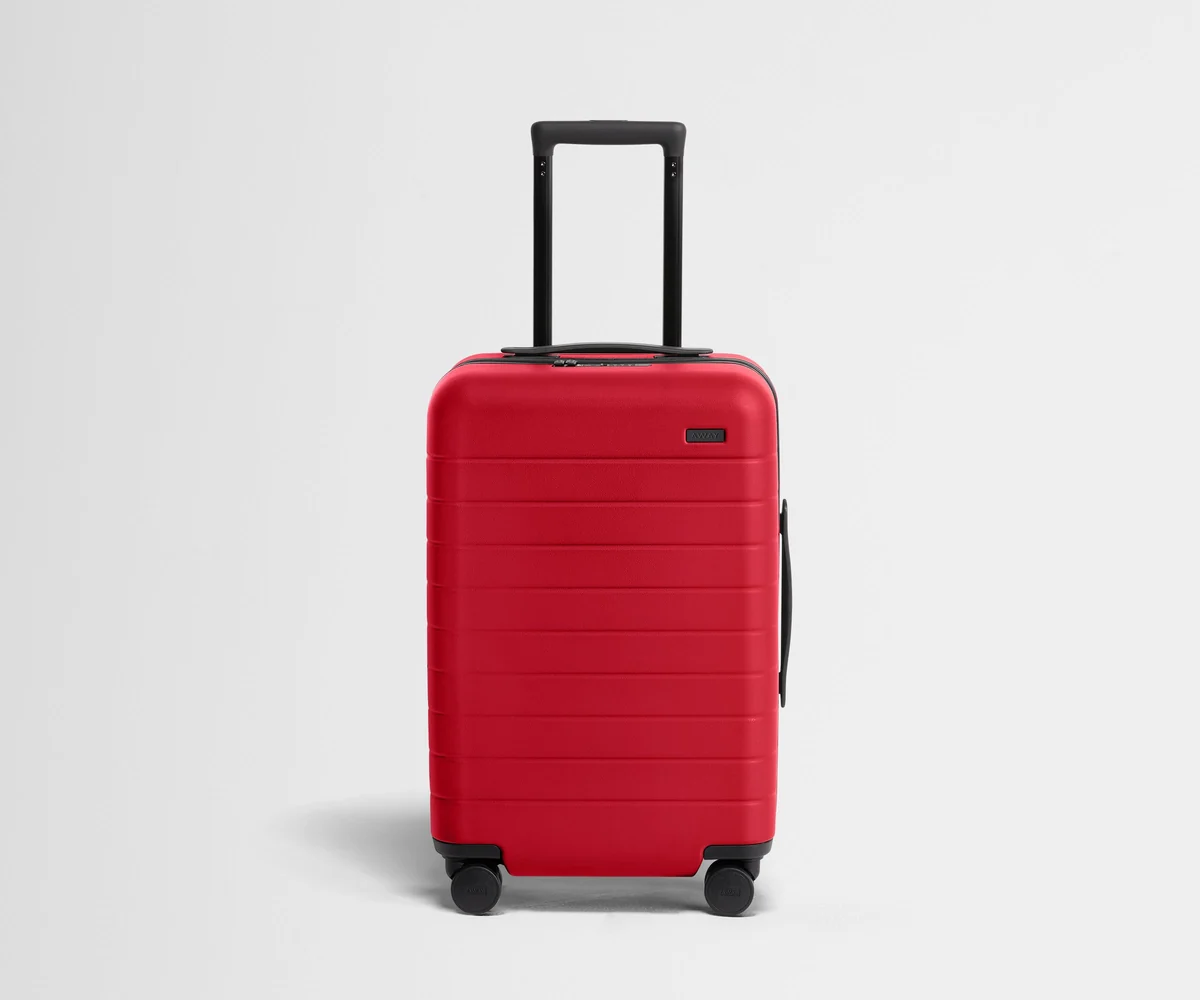
Away's standard Carry-On is an appealing starting point for travelers who want a hard-sided suitcase with a clearly defined size. Its most important comparison is with the airline's baggage allowance, not with the larger suitcases beside it in the collection.
Size is a real constraint
Away lists the standard Carry-On at 21.7 by 14.4 by 9 inches and 7.5 pounds. Its comparison page distinguishes this case from the Bigger Carry-On and expandable Flex versions. Those names are easy to confuse, and the dimensional differences can matter at the airport.
Compare every measurement with the carrier's current limit. A bag being marketed as a carry-on does not override an airline's rules. Even a small difference in width is relevant when a limit is strict, and connecting flights can involve different allowances.
Think about how you unpack
A hard-sided suitcase is useful when you prefer a defined packing envelope. That same structure makes it less forgiving when a last-minute item needs to be squeezed inside. Consider whether you usually unpack onto a luggage rack, on a bed or in a small room with limited floor space.
The empty weight belongs in the decision whenever the airline weighs cabin baggage. Subtract the suitcase weight from the permitted total before deciding how much clothing and electronics you can bring. Packing cubes improve organization but do not remove weight.
Verdict
The standard Carry-On is best considered by someone whose regular routes accept its measured dimensions and who prefers a structured suitcase. Travelers with unusually restrictive cabin limits should begin with the allowance and work backward. Verify the exact version in the basket, compare the full exterior measurements and pack a realistic load before the return window closes. A beautiful case becomes a poor purchase if its size creates a recurring airport problem.
Sources and product information
What works well
- Published full dimensions
- Defined hard-shell packing envelope
- Several clearly differentiated sizes in the range
What to consider
- Not automatically compliant with every airline
- Empty weight reduces packing allowance
At a glance
- Dimensions
- 21.7 × 14.4 × 9 in
- Published weight
- 7.5 lb
- Version
- Standard Carry-On, not Bigger or Flex